The User Research Strategist

Your team has Claude. Now they need output they can trust.

I train research teams to build Claude skills from their own plans, guides and reports, so the first draft follows your standards and your researchers keep their time for the judgment calls.

For research teams, and the PMs and designers who run studies alongside them.

BoschExperianHelloFreshGOV.UK

Where most teams are when they email me

Almost every team I talk to has Claude licenses, an internal AI task force and a lot of pressure to move faster, and nobody can say yet what good AI-assisted research looks like for them.

My early AI outputs were absolute garbage, and I'd sit there thinking, why didn't I just do this myself? I wrote a research plan skill that was supposed to make great plans and, guess what, it didn't, since I hadn't given it any context. Every skill I build now is based on previous work, and that's what makes the output follow my standards. It's the same thing I teach your team to do.

  • People at very different comfort levels, from basic prompting to building their own skills
  • Far more PMs and designers than researchers, with researchers reviewing everyone's studies
  • Templates that differ from person to person, so Claude has nothing consistent to learn from
  • An AI or security office that needs to sign off on what goes into Claude
  • Outputs that sound confident and fall apart the moment a stakeholder asks a question

How a program runs

When I ran a big Claude skills workshop in June, I assumed people had far more Claude experience than they did, and I spent most of it answering setup questions instead of building. So now every team program has prep before anyone joins a call, teaching and building in separate sessions with a gap between them, and support afterwards, since that's when the real questions come up.

  1. 1

    PrepWeeks one and two, mostly async

    We agree on the skills worth building by splitting your process into mechanical tasks, which Claude can take, and judgment tasks, which stay with your researchers. For each skill, your team pulls together:

    • three to five examples done well
    • two or three weaker examples, with a note on why
    • your template and any process docs

    Newer Claude users watch my recorded skills workshop beforehand, so the live time goes on building.

  2. 2

    Teaching and a live build2 to 2.5 hours

    I teach what a skill is and how it maps to your research process, then build one live from start to finish on your files, narrating every decision. People see how a skill comes together before they're asked to build one themselves.

  3. 3

    The hands-on build3 hours, one or two weeks later

    Your team splits into groups of three or four, each group owns one skill, and they build it from the examples they gathered. We close with every group testing its skill live, plus a one-page recommendation on who owns the shared library and how it gets updated.

  4. 4

    Plugin build3 hours, optional

    Your two to four most advanced Claude users and I package the skills into a plugin, with a lead agent that runs the steps in order and stops for a researcher to check the work at the points you choose.

  5. 5

    Async supportFour to eight weeks

    I review the skills your team builds and answer questions as they come up, so a skill that isn't triggering or a draft that feels flat gets fixed instead of abandoned.

What we build

Researcher skills and stakeholder skills are completely different things to build, so I treat them as separate tracks. Most teams start with one and add the other later.

Researcher skills

For your researchers' own work

  • Research plans from a kickoff transcript
  • Discussion guides and screeners
  • Synthesis support and insight writing
  • Reports built around the decision a stakeholder needs to make

I keep synthesis human-led. I do my own affinity diagram first and have Claude run alongside me so I can compare, and then I'm like, oh yeah, I completely missed that.
Stakeholder self-serve skills

For PMs and designers who run their own studies

  • Scoping that pushes back on a weak research question
  • Plans and guides inside the guardrails your team sets
  • Researcher checkpoints before launch and after insights
  • Readouts that point back to the evidence

These need a lot more hand-holding built in than researcher skills, so they take longer to build. They make the biggest difference on a small research team, since every study a PM runs well is one less waiting on a researcher.

A plugin for your advanced users

For teams that already have working skills

  • A lead agent that runs a study from question to synthesis
  • Approval stops where a researcher signs off
  • Connected to your existing skills and repository

A skill is one job, and an agent is a coordinator that runs several steps toward a goal. I only recommend this once the skills underneath it work on their own.

If you'd rather I build it for you

Some teams don't have time to build, so I build the skills, plugins and folder setup myself from your team's de-identified documentation, document how each one works, and run a handoff session so your team can use and adjust everything. I usually build seven to ten skills in an engagement like this, plus a skill-building skill so your team keeps making more after I step back.

Researcher skills and stakeholder skills

A skill I build for myself uses research terms freely and assumes the study should happen, since I'm the one deciding that. A PM or designer needs close to the opposite, so the stakeholder version checks whether the study should happen at all, asks a few questions at a time in plain words, and hands the work back to a researcher at the points your team chooses.

Here's how I build the two differently:

AspectResearcher skillsStakeholder skills
Who uses themYour researchersPMs and designers, and sometimes marketing, sales and customer success
LanguageResearch terms used freelyPlain words, with any research term explained in one line
QuestionsGathers all the context up frontThree questions at a time, so nobody gives up halfway
Starting pointAssumes the study should happenChecks whether it should, and whether a researcher needs to run it instead
PushbackSpars with you on direction, the way I would if you brought me a planCatches the weak requests your team sees every week, like "improve the user experience" or "ask users if they'd pay"
What comes outA first draft the researcher finishesA draft plus a handoff for researcher review, before launch and after the first findings
FindingsInsightsObservations, until a researcher has reviewed them
Built fromYour team's best plans, guides and reportsThe same, plus the weak requests your team turns away and the topics that always stay with a researcher

Skills teams build for researchers

  • Research plan from a kickoff transcript
  • Discussion guide builder
  • Screener builder
  • Synthesis helper that runs alongside your own affinity diagram
  • Insight writer with a so-what check
  • Pyramid-structured report

Skills teams build for stakeholders

  • Research request builder, which turns a Slack message into a request with the decision, metric and deadline
  • Study fit check, which says whether a study is self-serve or needs a researcher
  • Usability test planner
  • Question checker for leading and double-barreled questions
  • First-pass findings, packaged for researcher review
  • Can I say this?, which checks a claim in a deck against the research behind it

When a team builds stakeholder skills, I recommend two researcher-side skills to go with them, a setup skill that writes your team's rules into one file every stakeholder skill reads, and a checkpoint review skill for the two approval points, so researchers can review a study in minutes instead of redoing it.

Before we start

These four things decide how much your team gets out of the live sessions. If one isn't in place yet, tell me, and we'll plan around it.

  • Claude access for everyone joining the hands-on build. If licenses are still in progress, I run the teaching session on my own example files and we save the build for when access arrives.
  • A yes from your AI or security office on what can go into Claude, so your team knows which examples to pull.
  • An agreed version of good for each task you hand over, like what your research plans include. If your team hasn't agreed on that yet, I recommend we start there, since Claude can only follow a standard you've written down.
  • Someone who owns the skill library once I step back, so everyone keeps pulling from the same place.

What it costs

Training programs

ProgramUSD
Teaching session2.5 hours with a live build, for teams still waiting on Claude access or deciding where to start$3,000
Researcher skillsTwo sessions, three to four skills built by your team, four weeks of async support$6,000
Stakeholder self-serve skillsTwo sessions, four to five stakeholder skills with researcher checkpoints, four weeks of async support$7,000
Plugin buildA 3-hour session with your two to four most advanced users, added to either program$4,000
Stakeholder skills and pluginSix weeks of async support$9,500
Both tracks and pluginEight weeks of async support$14,500

Building and advising

EngagementUSD
Done for youSeven to ten skills, a plugin, your folder setup and scheduled tasks, documentation and a handoff trainingfrom $8,500
Monthly advising12 hours a month of training, review and feedback, three-month minimum$3,600/mo
Extra advising hoursFor questions and reviews outside a program$350/hr

Payment is 50 percent at booking and 50 percent after the final live session.

Each price covers the work around the live sessions too, from the scoping calls and pre-work brief to preparing the live build on your team's own files and reviewing what they build afterwards. Your team keeps the recordings, the slides, a companion guide and every skill built during the sessions.

What this looked like for two teams

A US university research team

17 people, two sessions, researchers and designers together

Their AI work group had already mapped the research process by phase, so we built straight on top of it. The first session was teaching and a live build. In the second, three groups each built a skill from their own cleared files:

  • a stakeholder readout generator
  • a UX impact planner
  • a research hub field translator

A US healthcare research team

Done-for-you build over three months

The team wanted two things, a way to catch design risk before engineering picks up a prototype and a way for more designers to run research without every study waiting on a researcher. I'm building a heuristic audit skill for their Figma prototypes based on their own design heuristics, a bundle of democratization skills for screeners and synthesis, and the folder setup and scheduled tasks around them, then handing it all over with training.

Nikki immediately understood our context, needs and goals, and created a workshop that was customised with hands-on, interactive exercises tailored to our company. We would work with Nikki again any time.
Caroline RathgebLead UXR, Personio
Our team left the training inspired with new ideas of measuring our impact and practical resources to put it into action.
Jessica WalkerSenior Manager, Customer and UX Research, ServiceNow
She speaks from deep experience, blending empathy, storytelling, and practical tools that researchers can apply immediately.
Neha Scher-ShahSenior UX Researcher, Humana
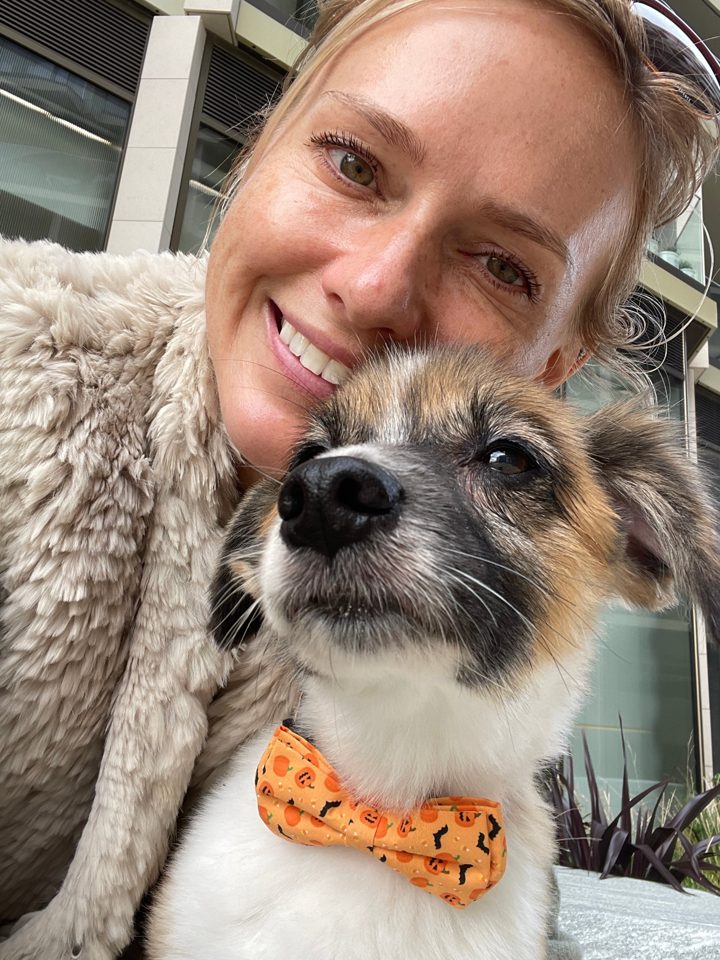
Nikki Anderson with her dog in a Halloween bow tie

I did it the manual way first

I'm Nikki. I spent a decade doing research by hand, leading research at Zalando, running research at start-ups as a team of one, and teaching it at Pratt Institute, before I started using AI in my own work.

I used to have my 12 interviews over here, a survey over there, and then I'd go hunting for customer support tickets. Now Claude pulls it into one view, while I still make the calls on what it means. That's the split I teach, where a good skill takes the checklist work off your plate so you have more time for the strategic work.

13 yearsin user research 3+ yearsusing AI in my research 76skills in my Claude Skills Bundle

Questions teams ask me

How many people can join?

For a hands-on build, I aim for about 20 people per session, working in groups of three or four. Bigger teams split across two sessions, often by comfort level, so newer users get the fundamentals and heavier users get to build something more ambitious.

Our team is all over the place with Claude. Will that work?

Yes, and it's the most common situation I see. Newer users watch my recorded skills workshop before the first session, I cover the fundamentals live so nobody who skipped it gets left behind, and the groups in the build session are mixed on purpose so experienced people pull others along.

What happens to our data?

We sign an NDA, your team de-identifies anything before it reaches me, and your AI office decides what's cleared. Once the skills are handed over, I delete the source material and my working copies. I recommend turning off web search when Claude works on research analysis, so it sticks to your files.

We're on ChatGPT or Copilot. Can you still help?

I teach in Claude, since that's where I build and test everything I use. The thinking about examples, guardrails and checkpoints carries over to other tools, and if I think Claude training isn't the right fit for where your company is, I'll tell you in my first reply.

Who owns the skills afterwards?

Your team does. Everything built in the sessions is yours to keep and change. My teaching materials, frameworks and guides stay mine and are licensed for your team's internal use.

What time are the sessions, and when can you start?

Live sessions for US and UK teams usually run at 8am Pacific, 10am Chicago and 4pm UK. I'm booking live sessions from late January 2027 right now, and prep can start before that. Sessions run on your own meeting platform and are recorded on your systems.

Learning on your own?

I run live Claude workshops for individual researchers on Maven, from skills for beginners through to building agents.

See the Maven workshops

Tell me about your team

Send me an email with a few lines on these, and I'll reply with the program I'd recommend and a rough price:

  • how many people would join, and their roles
  • where they are with Claude today
  • the research tasks you'd love them to stop doing by hand
  • whether PMs and designers run their own studies
nikki@userresearchacademy.com
Write the email

I work Monday to Thursday, 9am to 5pm UK time.